West Des Moines scrap is office copper and older-neighborhood plumbing
West Des Moines splits in two. North of the Raccoon and along the I-235 office parks, tenant build-outs leave cable, light steel, and the occasional copper ground. South toward Jordan Creek, retail refreshes and restaurant teardowns produce stainless, aluminum storefront, and mixed demo that should not be priced like bare bright.
The residential side is established: 1970s and 1980s houses with copper still in the walls until a kitchen opens up. Those loads fit in a pickup if they are sorted, and they disappoint people who mixed them with the old furnace. Send a photo from the driveway, not a guess from last month’s spot chart.
Local prices vary by yard. Send a photo for a quote. We do not publish a West Des Moines scale sheet.
Des Moines Scrap is an independent referral service that connects you with local scrap yards.
Contractor scrap form · Gold and silver · Cash for cars
Sort West Des Moines scrap by material and condition
A magnet is a useful first check. If it sticks, the piece is usually ferrous, such as steel or iron. If it does not, it may be copper, brass, or aluminum, but the test does not identify the metal or its grade. Keep magnetic steel separate from non-ferrous material, and do not assume every non-magnetic piece has the same value.
Copper wire and pipe can be graded differently. Bare bright is clean, uncoated copper wire with no insulation or attachments. #1 copper is generally clean pipe or other copper with limited contamination; #2 may have solder, paint, or other attached material. Insulated wire is graded with its insulation, so keep it apart from stripped copper and ask the partner yard how it wants each type shown.
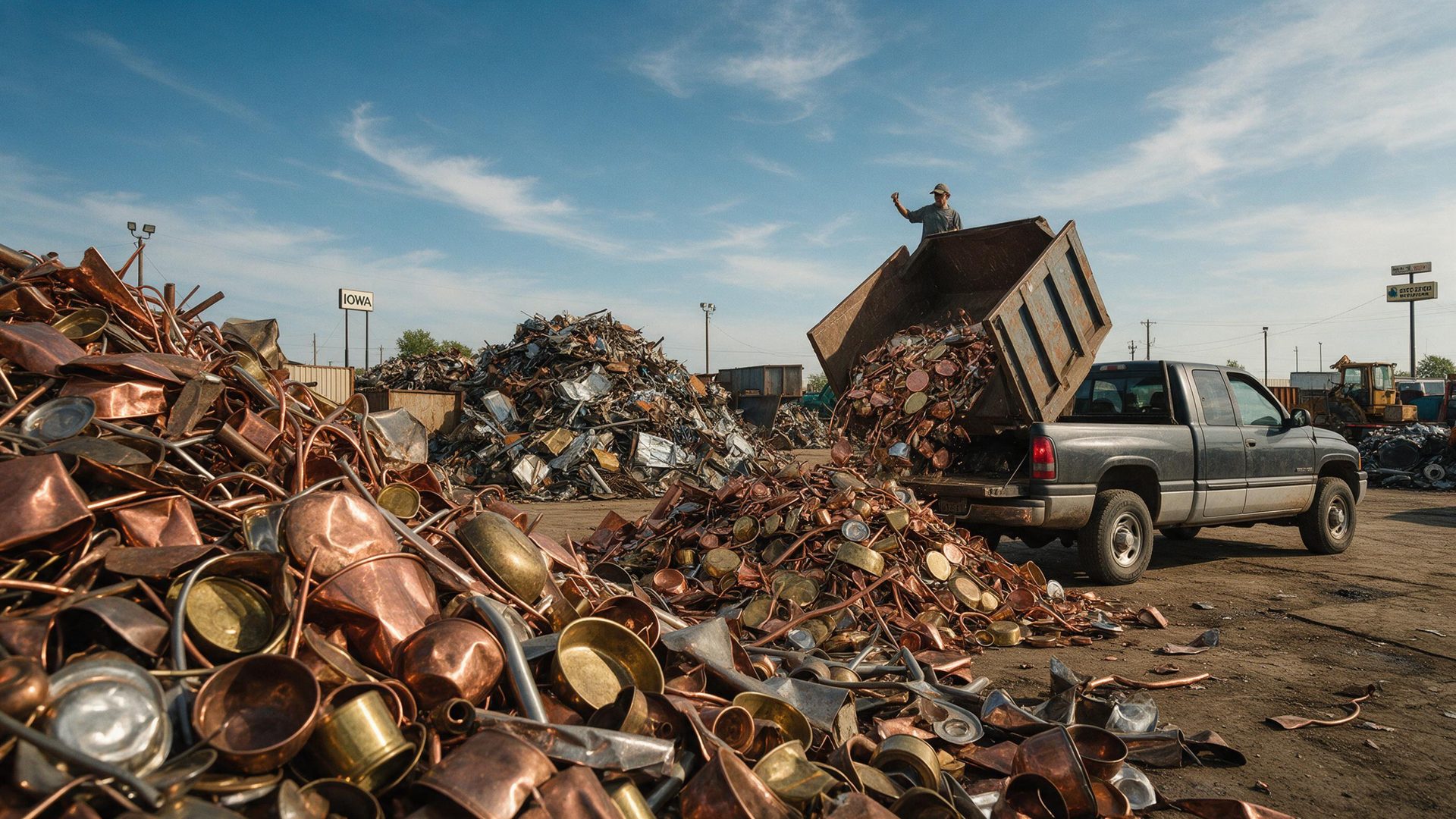
Keep brass fittings, copper, and aluminum in separate groups. Aluminum can include clean sheet, cast pieces, extrusions, or material with steel attached, and those forms may not be graded alike. Dirt, concrete, plastic, screws, and mixed metals can affect how a load is assessed. A few clear photos of each sorted pile help a yard understand what is being quoted.
Plan a West Des Moines scrap or vehicle pickup
Stripping wire takes time and creates sharp scraps. It may make sense for heavier, clean wire, but thin or mixed wire can take longer to process than the material is worth. Compare the yard's guidance for insulated wire with the time and tools you would need to strip it. Do not burn insulation; fumes are hazardous and the resulting copper may be rejected or graded down.
Before arranging pickup, send photos of the whole load and close-ups of anything that may change its grade. Include your location, approximate amount, access for a truck, and whether material is already sorted. Keep the route to the pile clear, and use gloves and eye protection when handling sharp edges. Ask the yard what it can load and what must be moved by you.
This site connects sellers with independent partner yards; it does not buy scrap itself. The yard confirms the final grade and handles the scale ticket and payment, and may require identification. For appliances, ask before loading: many yards require refrigerant to be properly recovered before accepting cooling equipment. If a junk car is included, check title and ownership-document requirements with the yard before arranging removal.
Questions
Can a magnet tell me whether metal is worth more?
No. It is only a quick way to separate many ferrous items, such as steel, from non-ferrous items that do not attract a magnet. It cannot identify a specific alloy or grade. Remove attached steel where practical, keep the piles separate, and let the partner yard confirm how each material will be graded.
Should I remove insulation from copper wire before sending a photo?
Not necessarily. Stripping can expose clean copper, but it takes time and can leave sharp waste. Thin, mixed, or difficult-to-strip wire may be better left insulated. Photograph the wire as it is and ask the yard how it grades that type before spending time on preparation.
Can I put an old refrigerator or air conditioner in a scrap load?
Ask the partner yard first. Refrigerant must be recovered properly, and many yards will not accept cooling equipment with refrigerant still present or may ask how it was handled. Do not cut refrigerant lines or try to vent the system. Keep the appliance intact until the yard explains its acceptance requirements.
What should I ask before removing a catalytic converter?
Contact the yard before removing or transporting one. Acceptance, identification, and paperwork requirements can vary, and the yard may ask for proof of ownership or information about the vehicle it came from. Do not assume a loose converter can be treated like ordinary mixed scrap. Keep vehicle records available and follow the yard's instructions.
What documents are needed to have a junk car removed?
Requirements depend on the vehicle and the yard. Ask whether a title is required and what alternatives, if any, it accepts when a title is unavailable. Have the vehicle details and your ownership documents ready when you request a quote. The partner yard handling the removal can confirm its paperwork and pickup requirements.