
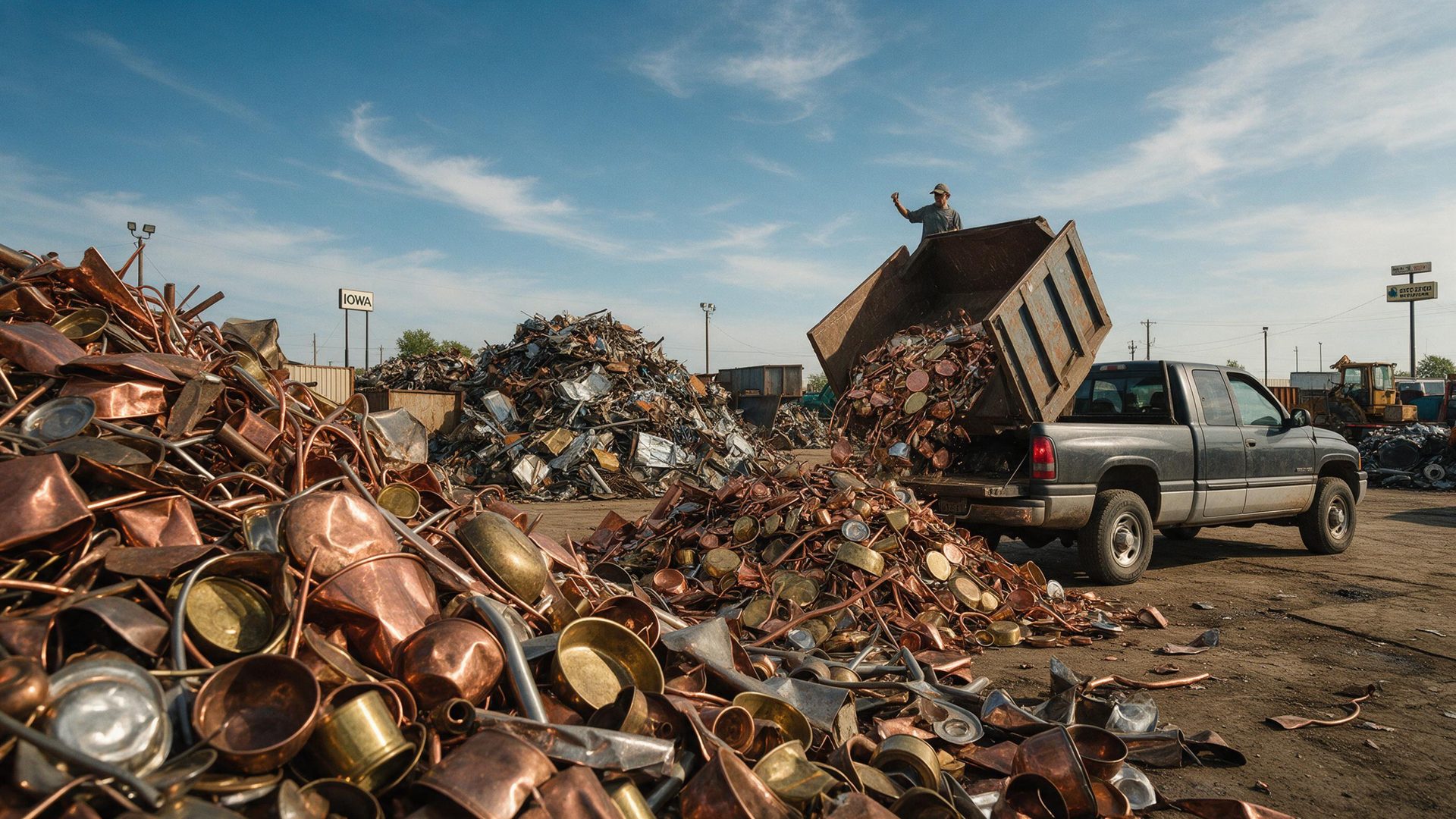
Clive loads are smaller, and they are usually already in a garage
Clive is built out. The scrap is garage cleanouts along the Greenbelt and side streets of 1970s–1990s houses: a treadmill frame, a rotten water heater, copper from a laundry move, and aluminum from an old sunroom. People here often want it gone before a listing, which means the pile is already sorted into corners if someone was paying attention.
There is little heavy industry. If you are a contractor between Clive and West Des Moines, say which city’s permit the job sits under so the pickup address is not ambiguous on a map.
Local prices vary by yard. Send a photo for a quote. We do not publish a Clive scale sheet.
Des Moines Scrap is an independent referral service that connects you with local scrap yards.
Contractor scrap form · Gold and silver · Cash for cars
Sorting Clive scrap by metal type and condition
A magnet is a quick first check, not a complete grade test. If it sticks, the piece is usually ferrous steel or iron; if it does not, it may be copper, brass, or aluminum. Some stainless steel behaves differently, so do not use the magnet alone to identify a valuable grade. Keep magnetic and nonmagnetic material separate until a partner yard confirms what it accepts.
Copper is commonly sorted into bare bright, #1, #2, and insulated wire. Bare bright is clean, uncoated copper wire; attached solder, paint, or heavy oxidation can change the grade. Pipe with fittings or solder may not qualify as clean copper. Insulated wire is graded with its covering in place. Stripping it can take time and may not pay off, so ask the yard how it grades each type before cutting insulation.
Brass fittings and aluminum items should also be kept apart from steel and copper. Dirt, plastic, screws, solder, and other attached material can make a load less clean and affect how it is graded. Do not take apart an item just to guess at its metal content. If a piece is mixed or hard to identify, include a clear photo and ask whether the yard wants it separated or left intact.
Getting a Clive cleanout ready for scrap pickup
Before requesting a pickup quote, gather the material in a place the carrier can reach and describe what is included. Note unusually long or heavy pieces, loose wire, and anything stored behind other items. Send photos from a few angles, including close-ups of copper or brass markings when visible. Mention stairs, narrow access, or other obstacles so the partner yard can judge whether the load can be collected as described.
Do not cut into a refrigerator, freezer, air conditioner, or other sealed cooling equipment to remove metal. These appliances can contain refrigerant that needs proper evacuation by qualified handlers. Ask the partner yard whether it accepts the whole appliance and what condition it must be in. Keep loose metal separate from sealed equipment, and do not assume a unit is ready for scrap just because it no longer works.
For pickup, keep the route clear and avoid stacking unstable material. Wear gloves and sturdy shoes when moving scrap; sharp sheet metal, rusty edges, and wire ends can cause injuries. The site connects sellers with independent partner yards; the yard handling the load sets its grading and pickup arrangements. Confirm how the weigh ticket, payment, and any required ID will be handled before the material is loaded.
Questions
Does a magnet tell me whether scrap is valuable?
No. It can help separate many steel and iron items from nonmagnetic metals, but it cannot identify an exact grade or price. Some stainless steel may not attract a magnet strongly. Keep uncertain pieces separate, send a photo, and ask the partner yard how it wants them sorted.
Should I strip insulation off copper wire before pickup?
Not automatically. Stripping takes labor, and insulated wire is often graded separately from bare copper. The difference depends on the wire and the yard’s grading rules. Ask the partner yard how it classifies your material before spending time stripping it, and do not burn wire to remove insulation.
Can I put a refrigerator in with other Clive scrap?
Keep it separate and ask the partner yard first. Refrigerators and similar cooling appliances may contain refrigerant that must be properly evacuated. Do not cut refrigerant lines or dismantle the sealed system. The yard can tell you whether it accepts the appliance and what preparation, if any, is needed.
Who weighs the scrap and pays me?
The independent partner yard handles the scale and payment, not this referral site. Confirm with the yard where and when weighing takes place, how you receive the weigh ticket, and what payment methods it offers. Ask what ID or other information it requires before pickup so there are no surprises at handoff.
What paperwork should I have for a junk car?
Ask the partner yard what ownership documents it requires before scheduling removal. A title is commonly requested, but the exact requirements can depend on the vehicle and ownership situation. Do not assume a registration alone is enough or sign incomplete paperwork. Confirm the documents directly with the yard handling the car.