Ames scrap follows the rental calendar and the campus
Ames turns over apartments every May and August. The metal is predictable: appliances with the cords cut, bed frames, and the occasional copper theft-recovery that a landlord should not touch without the police report. Legitimate landlord loads are fine. Anything described as “found wire” with no address is not.
The research and office side of Iowa State’s orbit produces surplus shelving, old lab benches, and cable when a room is decommissioned. Those need authorization from the building, not a midnight pickup. Households in the rest of Story County add farm-edge steel and ordinary remodel copper. Put the city in the form so a partner is not sent to the wrong Ames.
Local prices vary by yard. Send a photo for a quote. We do not publish a Ames scale sheet.
Des Moines Scrap is an independent referral service that connects you with local scrap yards.
Contractor scrap form · Gold and silver · Cash for cars
Sort Ames campus and rental scrap before pickup
A magnet is a quick first check when sorting a cleanout. If it sticks, the item likely contains ferrous metal such as steel; if it does not, it may be copper, aluminum, brass, or another material. The test is not a grade or a guarantee. Stainless steel and coated or mixed parts can behave differently, so keep uncertain pieces separate for the yard to inspect.
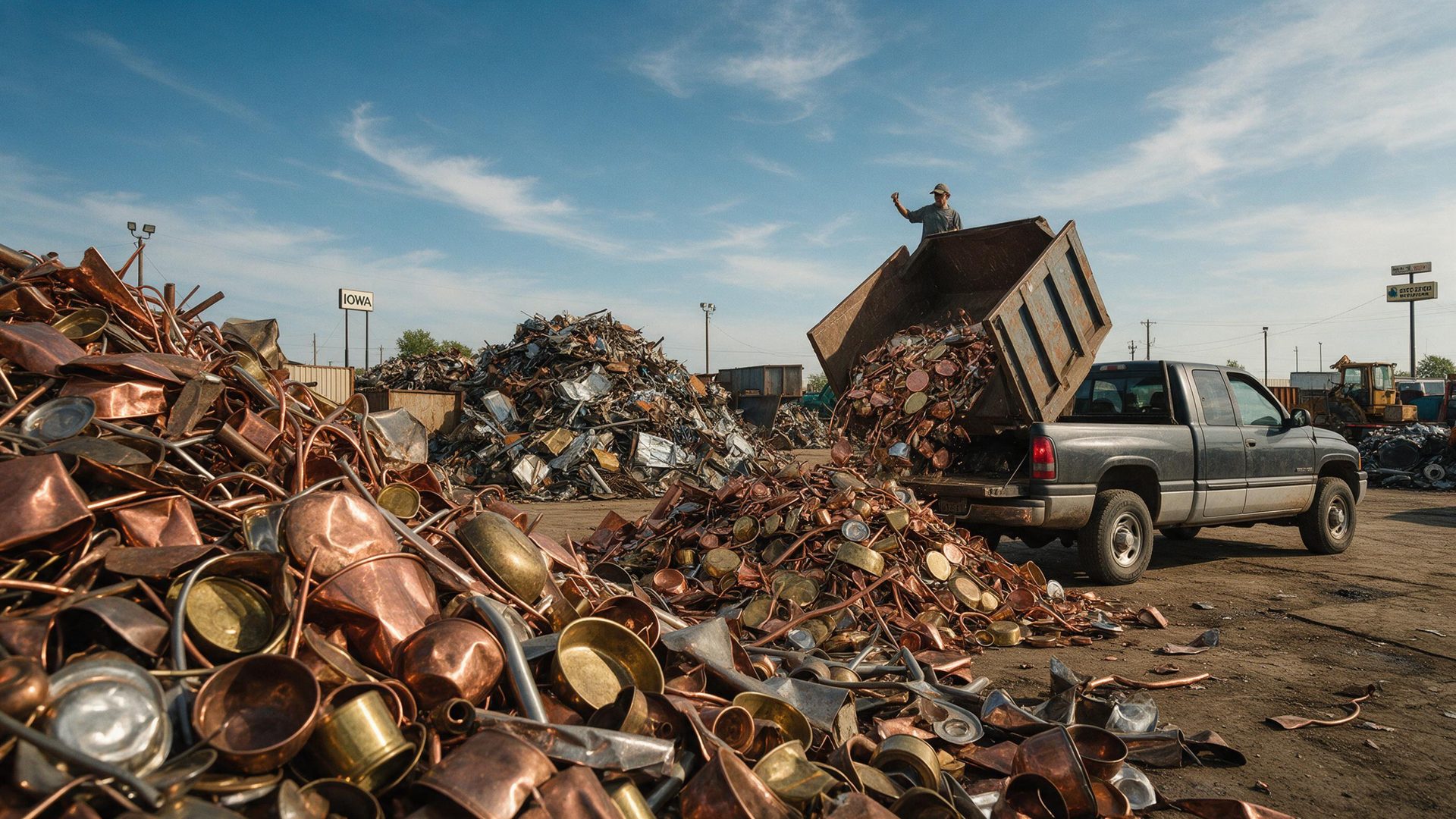
Copper wire and pipe can have different grades. Bare bright is clean, uncoated copper wire with the insulation removed; #1 and #2 copper allow different amounts of oxidation, solder, or attached material. Insulated wire is graded with its covering still on. A yard decides the final grade, so do not assume that all wire from an apartment or lab cleanout will be valued alike.
Removing wire insulation takes time and can create a mess. Compare the effort and safe handling involved with what the yard accepts, rather than stripping everything by default. Keep brass fittings and aluminum parts separate from copper, and avoid mixing steel screws, plastic, or other attachments into a clean pile. Dirty or mixed material may be graded differently from clean, sorted metal.
Plan an Ames lab or apartment cleanout safely
Before moving shelving, benches, or equipment out of a campus room, confirm that the building has approved the items for removal. A scrap pickup is not a substitute for checking whether a fixture or machine contains chemicals, batteries, pressurized parts, or data-bearing equipment. Follow the building’s cleanout process for anything that could present a safety or security concern, and keep questionable items out of the metal pile.
Appliances may contain refrigerant, and many yards require it to be properly evacuated before accepting them as scrap. Do not cut refrigerant lines or dismantle a unit to make it easier to load. Ask the receiving yard what condition it accepts and what preparation is required. Remove loose food and personal belongings, but leave components intact unless the yard gives different instructions.
For a rental turnover or room cleanout, have the pickup address, access details, a clear description of the material, and photos ready. Note whether items are indoors, upstairs, or blocked by other contents. This site connects sellers with independent partner yards; it does not buy scrap. The partner yard confirms acceptance, grading, weighing, payment, and any identification or paperwork needed.
Questions
Should I strip insulation from copper wire before asking for a quote?
Not necessarily. Insulation affects the grade, but stripping takes time and can be unsafe if done with unsuitable tools. Send a photo or describe the wire with its insulation on, then ask the partner yard how it accepts and grades that material. Compare the expected effort with the yard’s instructions before stripping any of it.
Can a magnet tell me whether campus equipment is valuable scrap?
No. It can help separate many steel items from non-ferrous metals, but it does not identify an exact alloy or determine a price. Equipment can also combine several materials. Keep uncertain pieces aside and provide photos or a description so the receiving yard can say whether it accepts them and how it wants them sorted.
What should I do with a lab item that may contain chemicals or batteries?
Do not put it in a scrap-metal load until the building or responsible staff confirms it is cleared for removal. Batteries, chemical residues, and pressurized parts can create handling risks. Follow the campus cleanout procedure and ask the receiving yard about acceptance requirements for any item that remains uncertain.
Can I put a refrigerator or other cooling appliance out for scrap pickup?
Ask the receiving yard before scheduling. Appliances containing refrigerant may need proper evacuation before a yard will accept them. Do not cut lines or attempt to release refrigerant yourself. Give the yard the appliance type and condition, and follow its instructions on preparation, loading, and whether the item can be included.
What paperwork should I have ready for an Ames cleanout pickup?
Have the pickup location, contact details, photos, and a clear description of the load ready. Ask the partner yard what identification or paperwork it requires for the material and who needs to be present. If anything is a vehicle rather than loose scrap, confirm title and other required documents with the yard before arranging removal.