Grimes is still pouring slabs, so the scrap is new
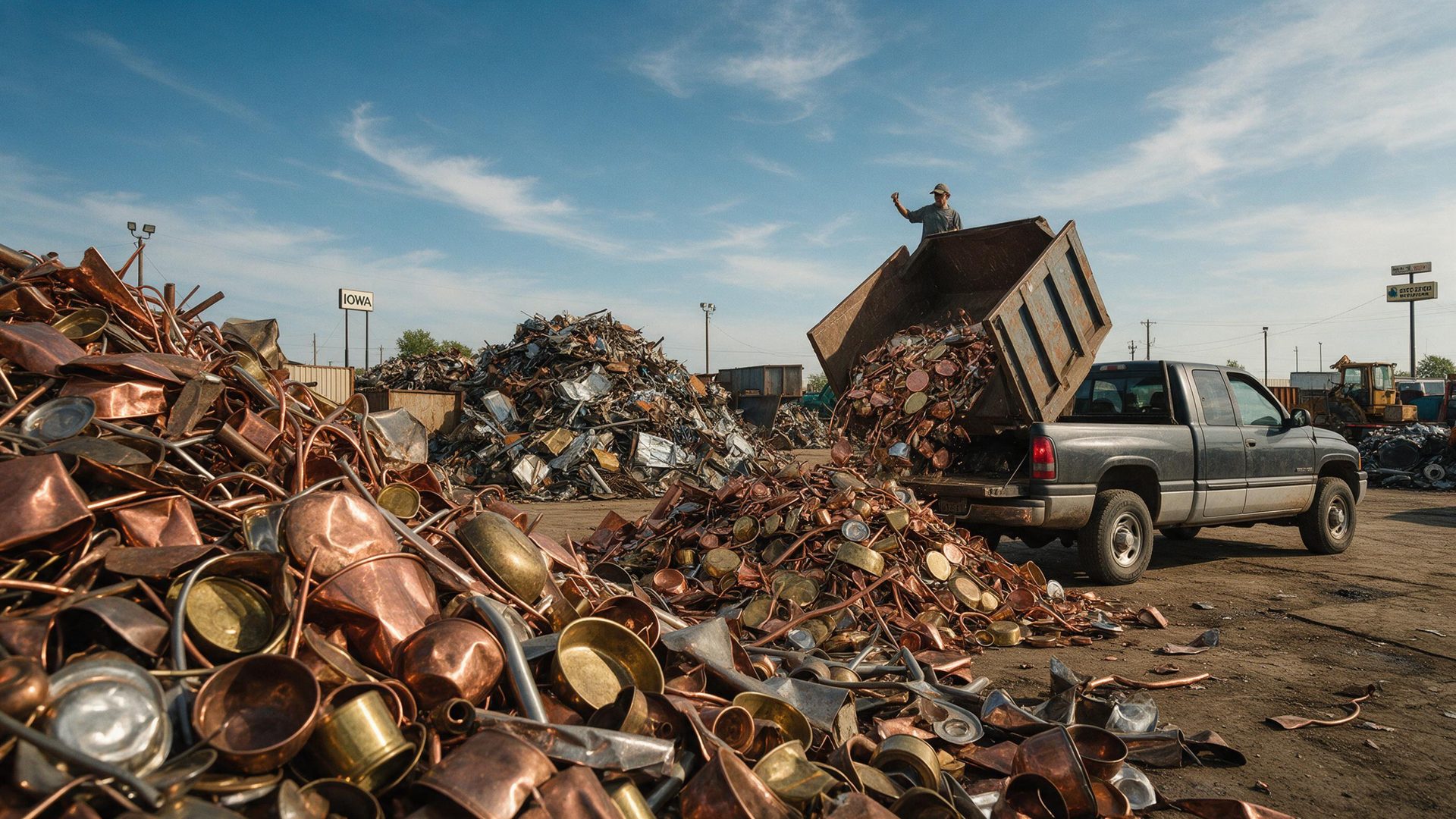
Grimes grew along Highway 141, and the metal shows it. Active streets have copper offcuts, rebar drops, and HVAC line that a rough-in crew would rather not haul back to the shop. Once the sod is down, the same address becomes a homeowner pile: packaging, a damaged appliance, and whatever the builder left in the corner of the three-car garage.
Say if the pile is still on an active site with a lockbox and a portable toilet, or if it is a finished driveway on a Saturday. Those are different routes for a yard truck.
Local prices vary by yard. Send a photo for a quote. We do not publish a Grimes scale sheet.
Des Moines Scrap is an independent referral service that connects you with local scrap yards.
Contractor scrap form · Gold and silver · Cash for cars
Sorting Grimes scrap by metal type
A magnet is a useful first check on metal from a Grimes job site or garage, but it is only a screening tool. Steel and iron usually attract a magnet; copper, brass, and aluminum do not. Some stainless steel can behave differently, so do not use the test as a final grade. Keep magnetic and nonmagnetic material apart, and ask the partner yard how it grades unusual pieces.
Copper grades depend on condition, not just color. Bare bright is clean, uncoated copper wire; #1 copper is generally clean pipe or wire without significant attachments; #2 may have solder, heavier oxidation, paint, or other contamination. Insulated wire is assessed with its insulation on, and accepted grades vary by yard. Do not cut fittings off or mix wire types before asking how the yard wants them presented.
Brass and aluminum also have different categories. Brass fixtures can include steel screws, plastic handles, or other attached material that affects grading. Aluminum may be sorted as cast pieces, sheet, or clean extrusion, depending on the yard. Remove obvious nonmetal attachments when it is safe and practical, but do not spend time dismantling a load until a partner yard confirms that the extra work makes sense.
Preparing a Grimes scrap pickup safely
Before requesting a pickup, note what the material is, roughly how much there is, and whether it is loose, bundled, or still attached to equipment. Send clear photos from more than one angle, including close-ups of mixed or unusual items. Tell us about stairs, gates, low clearance, or other access limits. The site connects sellers with independent partner yards; it does not buy or grade scrap itself.
Do not strip insulated wire simply to make it look cleaner. Stripping takes time, creates sharp scraps, and may not improve the return enough to justify the labor. Wire value depends on its type and recoverable copper, and a yard may prefer it intact. Keep wire away from wet, muddy, or mixed loads, and ask the partner yard which grades it accepts before preparing a large batch.
Leave refrigerators, freezers, air conditioners, and other refrigerant-containing equipment intact unless a qualified person has properly evacuated the refrigerant. Do not cut refrigerant lines or release gas to make an appliance easier to move. Keep people clear of sharp edges and unstable piles, and do not lift heavy appliances alone. Ask the partner yard what it can accept and what preparation it requires.
Questions
Does this site buy scrap metal in Grimes?
No. The site connects sellers with independent partner yards and does not purchase, grade, or pay for scrap. The partner yard determines accepted material and its grade, handles the scale and weigh ticket, and manages payment and any required identification. Ask the yard about its current requirements before arranging a load.
Should I remove insulation from copper wire before pickup?
Not without checking first. Stripping takes labor, leaves sharp scraps, and may not improve the value enough to be worthwhile. Yards may grade insulated wire by type and recovery. Send a photo or describe the wire, then ask the partner yard whether it wants the insulation left on.
Can I put a refrigerator or air conditioner in a scrap load?
Ask the partner yard before including one. Refrigerant-containing appliances generally need proper refrigerant evacuation before scrap processing. Do not cut lines or release refrigerant yourself. Describe the appliance and its condition when requesting a quote so the yard can explain its acceptance and preparation requirements.
What should I ask about a catalytic converter?
Ask the partner yard what identification, ownership documentation, and handling steps it requires before bringing or arranging pickup for a converter. Requirements can vary. Do not remove one from a vehicle you do not own or have permission to dismantle, and provide clear information about its source when requesting guidance.
Do I need a title to scrap a junk car?
Ask the yard what ownership documents it requires before arranging removal. Requirements can depend on the vehicle and the circumstances, so do not assume a bill of sale or registration will be enough. Have the vehicle identification information and your available paperwork ready when you contact the partner yard.