
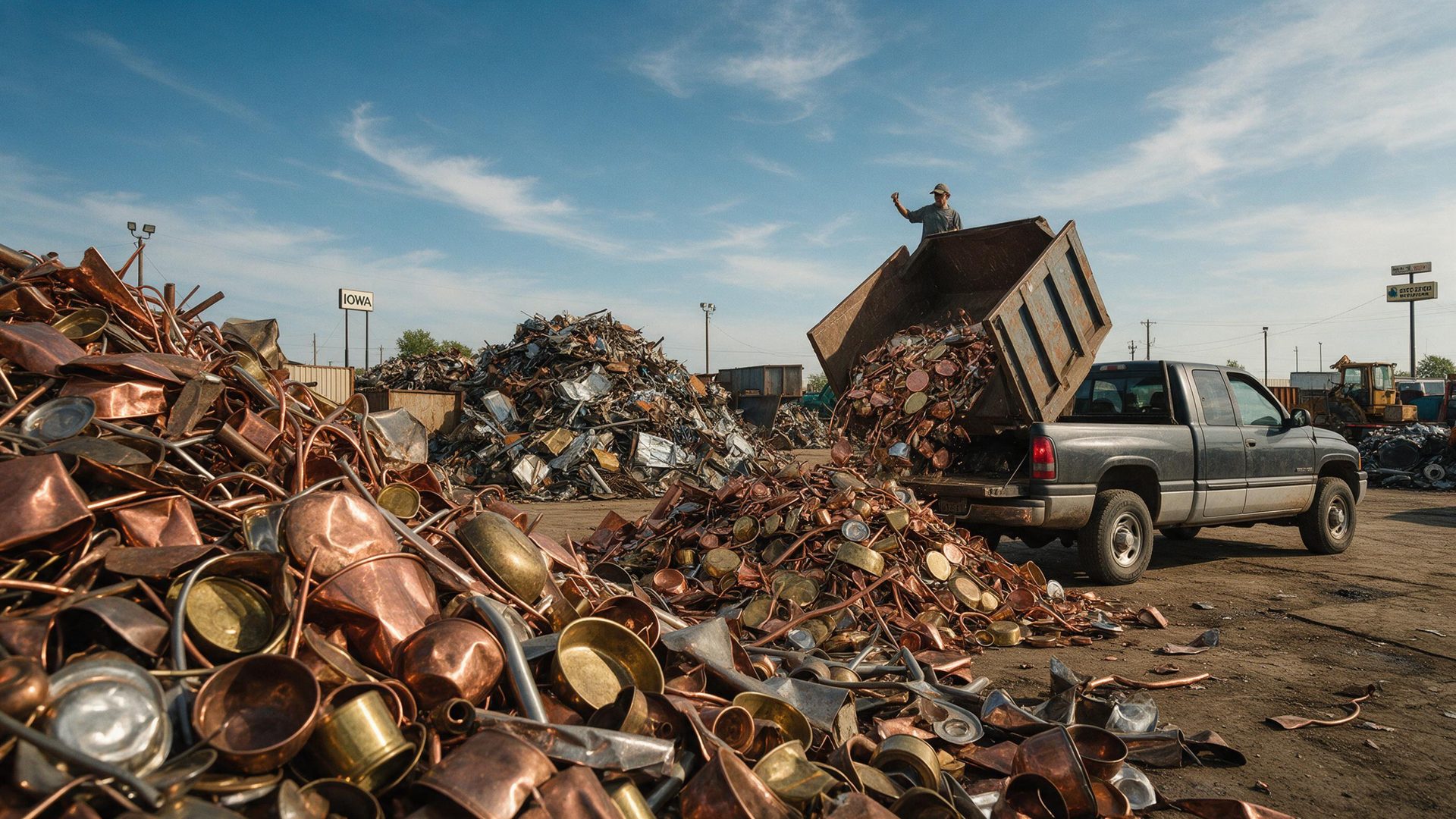
Bondurant’s heavy scrap is in the warehouse rows
Bondurant’s newer industrial buildings turn over racking and pallet rack faster than the housing stock turns over plumbing. A single tenant exit can be more steel than a year of garage cleanouts in town. It also may still be anchored. Photos of the bases and of the aisle width tell a yard whether they are sending a rollback or a flatbed with a pallet jack.
Inside the older part of town the loads shrink to water heaters, farm-edge steel, and a junk car behind a garage on a lot that used to be the edge of the county. Both are welcome. They should not be described as the same kind of scrap.
Local prices vary by yard. Send a photo for a quote. We do not publish a Bondurant scale sheet.
Des Moines Scrap is an independent referral service that connects you with local scrap yards.
Contractor scrap form · Gold and silver · Cash for cars
Bondurant warehouse scrap: sort by metal, not shape
Warehouse scrap can look like one large steel load, but racks, guards, wire, and equipment parts may be different metals. A magnet is a useful first check: ordinary steel usually attracts it, while copper, brass, and aluminum do not. The test is not proof of grade, and some assemblies combine metals. Separate obvious non-ferrous pieces before loading and describe mixed or attached material when requesting a quote.
Copper is often graded by condition. Bare bright is clean, uncoated copper wire; #1 and #2 copper have different levels of attached solder, coatings, or contamination; insulated wire remains covered. Keep each type separate if you can identify it. Stripping wire takes time and creates sharp scrap, and the extra work does not always make sense for a small amount. Ask the partner yard how it wants wire sorted.
Brass fittings and aluminum parts also lose clarity when mixed with steel, plastic, rubber, or dirt. Keep clean pieces apart from painted, oily, or heavily attached material, and do not assume every light-colored part is aluminum. A clear photo of the material and any labels or attached components can help a yard decide how it should be handled before a truck is dispatched.
Plan a Bondurant pickup around access and safe loading
Before a warehouse pickup, note whether racks or equipment are still bolted down, how much floor space the load occupies, and whether a truck can reach the loading area. Do not remove structural supports or cut into energized equipment to make a load easier to move. Ask the property manager or equipment owner about authorization, and let the partner yard know what remains attached so it can assess the right pickup plan.
For a useful quote, send photos from more than one angle, including close views of the metal and a wider view showing the route to the load. Include approximate dimensions, whether material is loose or secured, and any stairs, narrow doors, or blocked access. Keep the loading area clear of people and unrelated materials. The site connects sellers with independent partner yards; the yard confirms equipment, weighing, and pickup details.
Appliances and machinery can contain refrigerant, oil, batteries, or other components that need separate handling. Refrigerant should be evacuated through proper service procedures, not vented or released during dismantling. Keep unknown containers and leaking equipment out of a general scrap pile, and tell the yard what is present. For a junk car included with a warehouse cleanout, ask the yard what ownership documents and identification it requires before arranging removal.
Questions
Does a magnet tell me exactly what grade of scrap I have?
No. It is a quick way to separate many ferrous steel items from non-magnetic metals, but it does not identify an alloy or determine a yard’s grade. Coatings, attached parts, and mixed assemblies can affect how material is accepted. Send clear photos and let the partner yard confirm its sorting requirements.
Should I strip insulation from copper wire before pickup?
Not automatically. Bare wire may be treated differently from insulated wire, but stripping takes labor and leaves sharp insulation and wire ends to manage. Keep insulated wire separate, avoid burning it, and ask the partner yard how it wants each type presented. For a small quantity, the effort may not be worthwhile.
What should I do with rack uprights or machinery that are still anchored?
Do not assume the pickup crew will dismantle fixed equipment. Confirm that you have permission to remove it, and tell the yard which parts remain bolted down or connected. Do not cut live electrical lines or remove supports that may be carrying a load. The yard can discuss handling and equipment after reviewing the site details.
Can I put refrigerators or other appliances in a warehouse scrap load?
Ask the yard before mixing appliances with ordinary metal. Refrigerant-containing equipment needs proper evacuation, and appliances may also have wiring, batteries, oils, or other parts that need separate handling. Do not vent refrigerant or leave leaking equipment in a shared loading area. Describe the appliance and its condition when requesting pickup information.
Who weighs the load and pays, and what paperwork should I have?
An independent partner yard handles the weigh ticket and payment; this site connects sellers with yards and does not buy scrap or publish a local price sheet. Confirm payment details directly with the yard. If a junk car is part of the load, ask what title or other ownership paperwork and identification it requires before scheduling removal.